
Court Ruling Protects Immigrants Attending Manhattan Hearings
- Home
- ›
- News Alerts
- ›
- Court Ruling Protects Immigrants Attending Manhattan Hearings
Practice Areas
- News
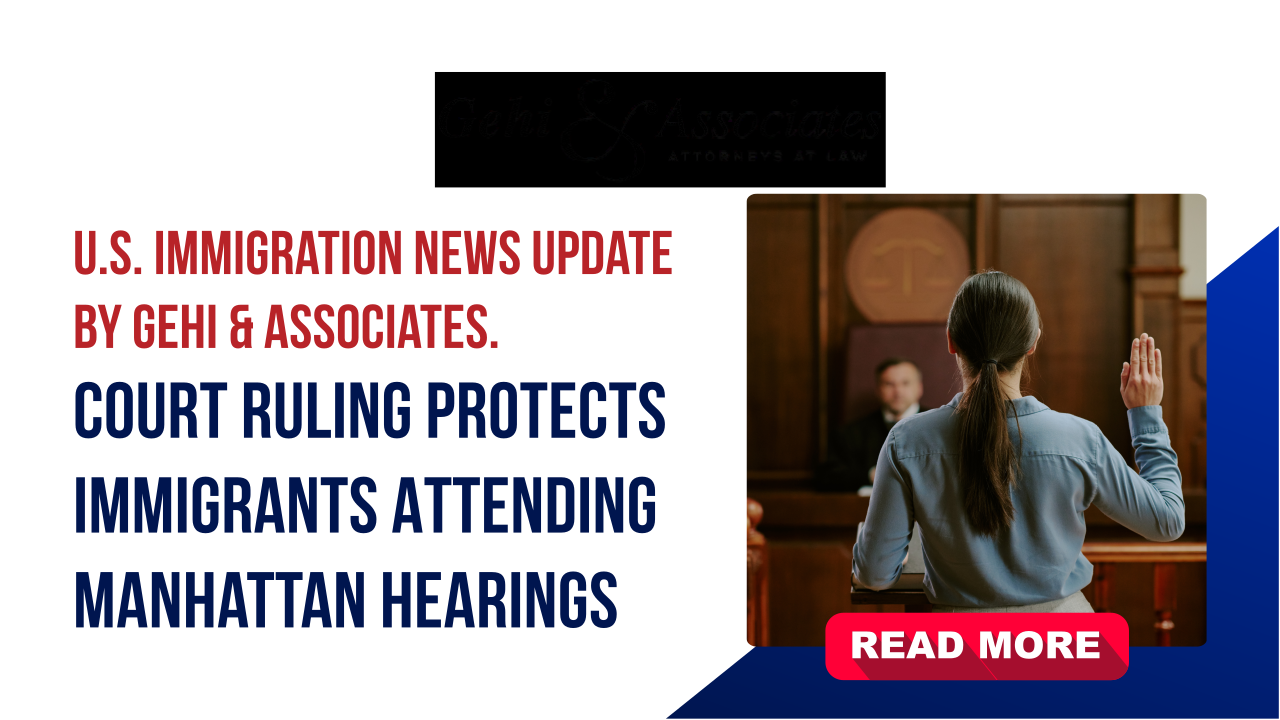
A major federal court ruling in New York has brought renewed attention to immigrant rights, due process protections, and the limits of immigration enforcement inside court buildings.
In a significant development, a federal judge has restricted most immigration arrests at three major Manhattan immigration courthouses, offering temporary protection to immigrants appearing for mandatory hearings.
The decision is already being viewed as one of the most important immigration-related courtroom rulings of 2026 because it directly addresses whether immigrants can safely attend court proceedings without fear of immediate detention by federal agents.
What Happened?
U.S. District Judge P. Kevin Castel ruled that Immigration and Customs Enforcement (ICE) agents can no longer broadly conduct civil immigration arrests inside or around three Manhattan immigration court locations except under limited and exceptional circumstances. The ruling applies to immigration courts located at:
- 26 Federal Plaza
- 201 Varick Street
- 290 Broadway
The judge’s order effectively halts a controversial enforcement practice that had become increasingly common during recent immigration crackdowns. Immigrants attending scheduled hearings were reportedly being detained immediately after appearing before immigration judges, creating fear among asylum seekers and individuals pursuing lawful immigration relief.
Why the Court Changed Its Position
Interestingly, Judge Castel had previously allowed the enforcement practice to continue. However, the court later learned that government attorneys had provided incorrect information regarding the legal basis for courthouse arrests.
According to court filings, federal prosecutors admitted that an ICE policy memorandum previously used to justify the arrests did not actually apply to immigration courts. The government acknowledged that earlier statements made to the court were mistaken.
After reviewing the updated information, the judge stated that revisiting the earlier ruling was necessary to prevent what he described as a “manifest injustice.”
This reversal became a central factor in the court’s new decision.
Why This Ruling Matters
Immigration courts are designed to provide individuals with an opportunity to present asylum claims, adjustment applications, cancellation defenses, and other forms of immigration relief. Critics of courthouse arrests argued that using hearings as enforcement opportunities discourages immigrants from appearing in court altogether.
The federal court recognized this concern.
Judge Castel noted that individuals should be able to attend immigration proceedings and pursue asylum or removal defenses “without fear of arrest.”
The ruling is particularly important because immigration hearings are mandatory. Failure to appear can often lead to in absentia removal orders, which may severely harm a person’s immigration case.
What Arrests Are Still Allowed?
The ruling does not completely prohibit ICE enforcement activity.
According to reports, ICE may still conduct arrests in exceptional situations involving:
- National security threats
- Public safety concerns
- Imminent violence risks
- Potential destruction of evidence in criminal matters
The court also noted that federal authorities remain free to enforce immigration laws outside courthouse settings.
This means the decision creates limitations not a total ban on courthouse immigration enforcement.
Impact on Immigrant Communities
The ruling could have a major psychological and procedural impact on immigrant communities in New York and beyond.
Over the past year, videos and reports showing immigrants being detained immediately after hearings created widespread fear. Some immigrants reportedly became afraid to attend scheduled proceedings despite legal obligations to appear.
Legal advocates have argued that fear-driven absences undermine the integrity of the immigration court system itself. Courts function properly only when individuals feel safe enough to participate in proceedings.
This ruling may help restore some confidence among immigrants pursuing:
- Asylum claims
- Family-based immigration cases
- Removal defense proceedings
- Adjustment of status applications
- Humanitarian protections
However, individuals should understand that immigration enforcement priorities can still shift rapidly depending on litigation outcomes, federal policy changes, or appeals.
The Role of Advocacy Groups
The lawsuit challenging the arrests was brought by several immigrant-rights organizations, including advocacy groups representing immigrant communities in New York.
These organizations argued that courthouse arrests interfered with due process rights and discouraged lawful participation in immigration proceedings.
Following the ruling, immigrant-rights advocates described the decision as a major victory for access to justice and fair court participation.
Could the Government Appeal?
Yes.
The Department of Homeland Security has indicated that it disagrees with the ruling and remains confident in its legal position.
Because the litigation is ongoing, future appeals or additional court orders are possible. Immigration policies connected to courthouse enforcement remain legally and politically contested nationwide.
For immigrants currently involved in removal proceedings, this means staying informed and maintaining close communication with experienced immigration counsel is extremely important.
What Immigrants Should Do Right Now
Although the ruling provides temporary protections in Manhattan immigration courts, immigrants should continue taking immigration court obligations seriously.
Important steps include:
- Attending all scheduled hearings
- Keeping copies of all immigration notices
- Updating address information with immigration authorities
- Consulting qualified immigration attorneys before court appearances
- Understanding individual case risks and legal options
Every immigration case is different. Factors such as prior removal orders, criminal history, visa overstays, pending applications, or prior immigration violations may affect how enforcement policies apply to a particular individual.
Final Thoughts
This federal court ruling marks a significant moment in the ongoing debate over immigration enforcement inside courthouses. By limiting most arrests at Manhattan immigration hearings, the court emphasized the importance of due process and access to justice within the immigration system.
At the same time, the legal battle is far from over. Immigration enforcement policies continue to evolve, and future appeals could shape how similar cases are handled across the country.
For immigrants navigating court proceedings, accurate legal guidance remains essential.
Related News

Delaney Hall
June 16, 2026
GEO Says ICE Controls Access to New Jersey Detention Center Amid Inspection Disput
deportation defense
June 12, 2026
Administration Seeks to Narrow Order Limiting Warrantless ICE Arrests
Free Consultation
For Faster Response
We are Available 24/7
Our law offices in NY offer free virtual and in-person consultations for all legal and immigration matters. To schedule one, please get in touch with us today!