
Blog Categories
Practice Areas
Tags
- best immigration lawyer nyc, dignity act 2022, dignity act immigration, dignity act immigration 2022, dignity act immigration 2022 passed, free consultation immigration lawyer, free immigration legal services, gehi, gehi & associates, gehi & associates (jamaica branch), gehi & associates (ozone park), gehi & associates queens, gehi and associates, gehi and associates jackson heights, gehi and associates jamaica, gehi and associates mumbai, gehi and associates ozone park, gehi and associates reviews, gehi law, gehi law firm, gehi law jamaica, gehi law ozone park, gehi lawyer, gehilaw, h1b visa sponsors database, h2b visa employer list, h2b visa jobs, how to apply for green card, how to find an employer for h2b visa, immigration attorney, immigration attorney free consultation, immigration attorney jamaica, immigration attorney new york, immigration attorney nyc, immigration attorney ozone park, immigration law consultation, immigration law firms nyc, immigration law free consultation, immigration lawyer, immigration lawyer free consultation, immigration lawyer free consultation over the phone, immigration lawyer in jamaica queens, immigration lawyer jackson heights, immigration lawyer jackson heights ny, immigration lawyer jamaica, immigration lawyer near me, immigration lawyer near me free consultation, immigration lawyer new york, immigration lawyer new york free consultation, immigration lawyer nyc, immigration lawyer nyc free consultation, immigration lawyer ozone park, immigration lawyer queens, indian immigration lawyer in jackson heights ny, jamaican immigration lawyer near me, k1 visum, marriage green card timeline 2022, naresh gehi, naresh gehi attorney, naresh m gehi, neha chopra, new york city immigration lawyer, nova lei de imigração eua 2022, ny, poonam minhas, sidrah malik, us immigration lawyer in jamaica, visa bulletin, visa tn y residencia permanente, what is a resident alien card, who is considered a us citizen, иммиграционный адвокат сша бесплатная консультация
- Blog
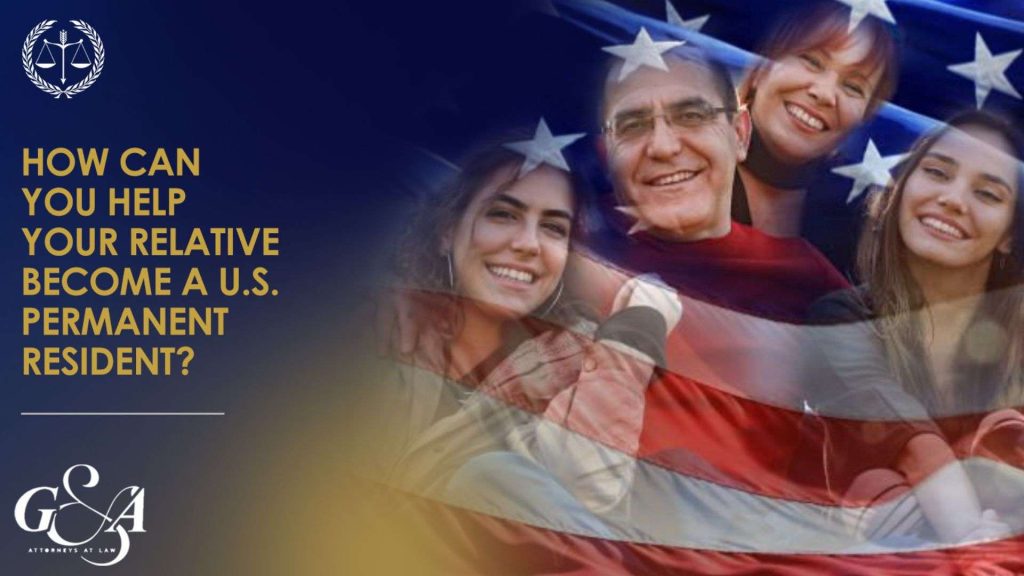
If you have a relative who is a U.S. permanent resident and you want to sponsor them for U.S. citizenship, there are several steps you need to take. Read on and learn all there to know about the U.S. permanent residency citizenship for the relative you wish to sponsor.
What are the Steps?
First, your relative must be eligible for citizenship through the family member sponsorship program. This means that they must not have any criminal history or other issues.
They also must demonstrate that the person can financially support themselves and their dependents without assistance from the government or other sources of income, such as welfare programs or public assistance (including Medicaid).
Next, you must complete an I-130 form with the USCIS (U.S. Citizenship and Immigration Services) office closest to where your relative lives or where they currently reside if it is within 100 miles of that office.
This form will request information about both yourself and your relative so that USCIS officials can determine whether or not they are eligible for citizenship through family sponsorship.
Upon approval of this form, they will receive an Employment Authorization Document (EAD) card, which will allow them to legally work in the United States while waiting for the processing of their green card applications; this process typically takes between six months to two years depending on how quickly USCIS processes all applications it receives.
Can a Family Member Sponsor a Relative to Live in the USA?
If a relative would like to become a U.S. permanent resident, they will need to have a family member sponsor them. The person (if it is you) who sponsors their permanent residency application must meet the requirements set out by the U.S. government, which include:
- They must be related to you by blood, marriage, or adoption
- They must be over 18 years old and financially capable of supporting themselves and their family member.
- They must be present in the United States.
- They must have lived with you for at least two years before filing the petition for permanent residency on your behalf.
- They must be able to provide proof of financial support during this time period.
If you have a family member living in the U.S., you can sponsor them for permanent residency. This means they will be able to live and work anywhere in the U.S. and travel outside the country. To sponsor your relative, you must meet certain requirements:
- You must be at least 18 years old and a U.S. citizen or permanent resident.
- You and your relative must be related by blood or marriage.
- Your relative cannot have any criminal convictions or pending criminal charges.
- Your relative must have lived in the U.S. for at least five years before applying for citizenship.
- Once you’ve met these requirements, you can begin the process of sponsoring your family member through USCIS (the United States Citizenship and Immigration Services).
Upon meeting all these requirements, if you are a U.S. citizen or green cardholder, you can sponsor your relative to become a permanent resident.
What Should You Submit?
- You will need to fill out Form I-130, Petition for Alien Relative, and submit it to the U.S. Citizenship and Immigration Services (USCIS).
- You will also need to provide supporting documents, such as proof of your relationship with the person you are sponsoring and evidence that they have been living in the United States with you for at least two years.
- Once USCIS approves your petition, they will send it to the National Visa Center (NVC).
- NVC will then forward your petition to the U.S. embassy or consulate in the country where your relative currently lives so that they can schedule an interview appointment with an immigration officer.
- The officer will review their application and decide whether or not they should be allowed into the United States as a permanent resident based on their qualifications for entry into the country (such as their age, education level, etc.).
When you sponsor a relative, you promise to provide financial support for them during their first year in the U.S. This can be done through taxes, health insurance, and other means of providing financial support as required by law.
You also need to prove that any other family member who is currently living in the United States is capable of supporting themselves financially during this time period as well as being able to care for themselves once it has passed; this includes children under 21 years old (or up to age 23 if they are enrolled full time in high school).
If no other family members can provide financial support, they will not be eligible for sponsorship under these guidelines until they reach adulthood (18 years old).
Conclusion
If you have a relative eligible for a family-sponsored green card, you can sponsor them for U.S. permanent residency. You must be at least 18 years old, a U.S. citizen or legal permanent resident, and have lived in the United States for at least three years before filing Form I-130F with USCIS.
By satisfying all the crucial guidelines, you can get permanent residency for your relative and help sponsor the person. That is the key point; hopefully, it will help your relative get the citizenship they deserve. If you want to get permanent residency for your relative, the assistance of a qualified immigration attorney might be very useful.
They can figure out what you and your relative need and easily arrange all the documentation.
Related Posts
Free Consultation
For Faster Response
We are Available 24/7
Our law offices in NY offer free virtual and in-person consultations for all legal and immigration matters. To schedule one, please get in touch with us today!