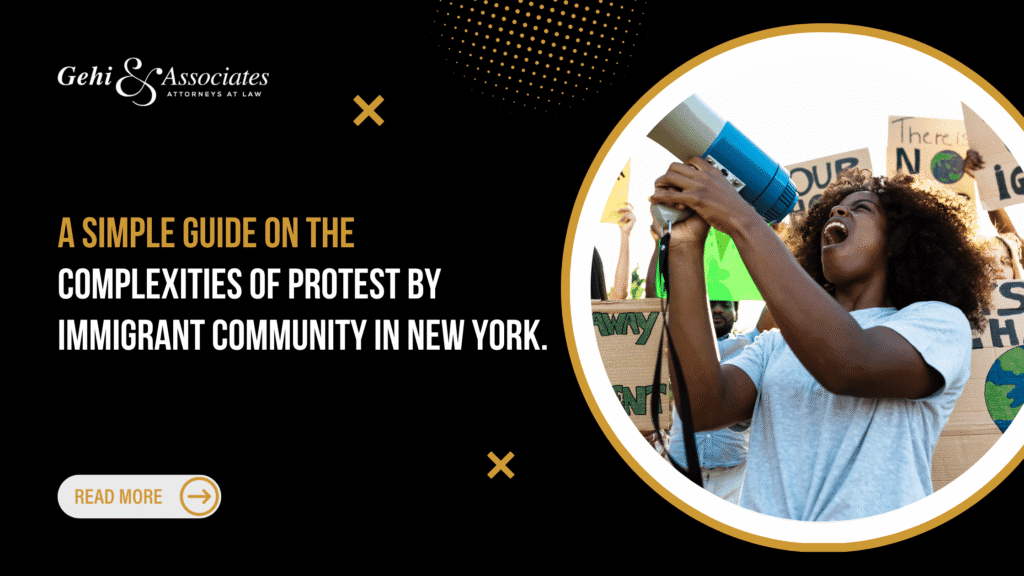
The immigrant community in New York has a long history of standing up against unfair treatment. Everyone living in the US, including newcomers, has the right to get involved in politics and protest. One of the main ideas in the United States is that people can speak their minds and protest freely. Everyone living here has the right to speak their mind and protest, no matter where they are from or if they are here legally.
Sadly, the immigrant community that wants to join in the protests might find themselves in a tough spot. Even though the history and traditions of the US were built by immigrants and the process of coming here, immigrants still need to understand their rights before joining a protest to stay safe. There have been reports of the US Department of Homeland Security (DHS) and U.S. Immigration and Customs Enforcement (ICE) showing up and watching over protests in the past, along with local police and even federal troops. This makes it risky for the immigrant community to think about showing up to future protests.
Undocumented immigrants are at a higher risk when they run into the police, because any time they interact, even if they don’t get in trouble or are arrested, it could lead to being sent back to their home country.
This guide aims to guide the immigrant community about the intricacies of their involvement in protest.
Risks of protest for the immigrant community in New York
When the immigrant community in New York joins in protests, they can end up in a lot of trouble, facing some risks that every protester might encounter, but also some that only come with being undocumented.
There is always the chance someone might get hurt if the protest turns violent. The immigrant community in New York that stands up publicly can end up getting hurt by other protesters, people who disagree with them, or even by the police.
The police might use tear gas, rubber bullets, or even clubs and shields to stop the protesters. But these dangers aren’t just limited to immigrants; everyone at the protest could be at risk. Still, there are particular dangers the immigrant community in New York faces when they try to protest legally:
- Getting arrested and then going to jail or being convicted.
- Getting deported even without getting arrested or convicted.
- Having a hard time getting permanent residency because of an arrest record.
- Losing their job visa because of an arrest and conviction.
- Being undocumented immigrants, they put themselves at risk of being sent back to their home country right away.
- Sending someone to jail for way longer than usual
These are some of the risks that the immigrant community in New York might face when they decide to stand up and be heard.
More on the risks
If ICE agents show up at the protest and find out you don’t have legal status, they might arrest you. According to ICE’s Sensitive Locations Memorandum, ICE shouldn’t bother questioning, arresting, or searching people at public rallies. But, just to be clear, this memo doesn’t completely shield you from ICE at these events.
It hasn’t stopped ICE from showing up at protests either. That is why it is super important to stay quiet, be careful about what you say, especially if it is about your immigration status, and to think twice before getting into any interactions with the police.
Any time you talk to the cops, there is a chance you could end up with ICE involved, even if you didn’t do anything wrong or haven’t been charged with anything.
The rights of the immigrant community during the protest
People who come to the US, whether they have papers or not, still have the same basic rights as everyone else under the US Constitution.
These rights are for everyone, no matter where they are from, if they are a citizen, or how they got here. But if you are thinking about joining a public protest or rally, it is important to know what you are allowed to do.
- You have the right to speak your mind.
The First Amendment to the US Constitution says you can say what you want without the government stopping you from doing so. This means you can join in protests, marches, and rallies.
This right to speak up and protest is for everyone in the US, no matter if you are here legally or not. But if you are undocumented and you join a protest, there are some risks (as discussed earlier), and you should be prepared.
- You are also protected from being punished for speaking up.
The government can’t punish you for speaking your mind or for joining a protest. They shouldn’t arrest you or do anything bad to you just because you are at a rally or speaking out about politics, like immigration.
But, in the past, leaders of immigration protests have faced harassment, arrests, and detention just for talking about US immigration policies. So, before you go to a protest, make sure you have a plan to stay safe.
If you are worried about your immigration status and going to a rally, talk to an immigration attorney who knows about immigration to understand your rights and what to do if you get arrested or detained.
- You also don’t have to talk if the police ask you questions.
No matter where you are from or your immigration status, you have the right not to answer questions from the police, including immigration officials.
If you are arrested or detained at a protest, you don’t have to answer any questions, especially about your immigration status. This right, from the Fifth Amendment to the US Constitution, is for everyone.
- Protection against unfair searches and grabs.
The Fourth Amendment to the US Constitution ensures that everyone, no matter where they are from or their immigration status, is protected from unfair searches and seizures.
This means you don’t have to let the cops, including those from immigration, search you, your stuff, your home, or your car unless they have a good reason.
The Supreme Court has made a bunch of rules about this, making it a bit complicated. For example, if you are stopped and the cops want to do a quick check to make sure you are not hiding anything dangerous, like a weapon, they can.
But, if you say yes to them searching you or your car, they are free to look around. You can always say no, though. If you do, the cops need to get a legal approval from a judge to search you.
- The right to talk to a lawyer.
If you get arrested or detained, you are allowed to talk to a lawyer. If you are an immigrant community in New York planning to join a protest or rally, it is a good idea to have an immigration lawyer on speed dial. This should be part of your safety plan, just in case you end up getting arrested.
Getting a lawyer right away is a smart move. They will make sure the cops are playing by the rules and not messing with your rights.
An experienced lawyer can also help get you out of jail faster and guide you through the legal process. Plus, if you don’t have a lawyer and can’t pay for one, the state may pay for your legal help.
Helpful guidelines for the protest by the immigrant community in New York
If you are going to a protest, march, rally, or any kind of public show, keep these tips in mind:
- Safety plan.
Make a safety plan before you go to a protest. You should have (1) the contact info for a lawyer you can call if you need one, and (2) a way to take care of any kids or other needs you might have. If you are going with others, figure out a way to look out for each other.
- Bring a paper list of helpful resources.
This list should have info on bail fund help and groups that can give you legal advice.
- Find out who oversees the event and get the contact info for the organizers or any local help groups they might have.
- Figure out the route to the protest and know where the emergency exits are.
- Protect your privacy online and on social media.
Leave your phone at home or switch off face and fingerprint recognition. If you must bring your phone, turn off Face ID and fingerprint so only you can unlock it. This makes it harder for the cops to get into your phone without asking.
Use apps that keep your messages private, like Signal and WhatsApp. These apps make it tough for others to snoop on your chats.
Don’t post pictures of yourself at protests online. The cops, including immigration officers, can check your social media and use what you post against you.
- Understand your rights and the laws about taking photos and videos of police.
While you are out in public, the rules on whether your video footage is private and if you must give it to the cops can vary by state. While you are allowed to take photos and videos, the law in different places can be different about whether your video footage is private and if you must hand it over to the cops.
- Talking to police or agents.
You don’t have to answer any questions, but you might need to show ID (as explained later). Say you want to keep quiet. Don’t lie.
If you get pulled over, ask if you are free to go. If they say yes, just walk away. But don’t leave without asking. If they say no, you are stuck and shouldn’t answer anything. Ask to talk to a lawyer and don’t sign anything or give out any info.
Don’t agree to a search. If they want to pat you down, make it clear you don’t want them to.
Don’t sign anything without talking to a lawyer first, and make sure you get what it says. Ask for a copy in another language if you don’t speak English.
Don’t fight back or resist arrest, even if you feel like your rights are being trampled. Instead, keep track of what is happening and get in touch with a lawyer to see what you can do.
Don’t admit to anything in court until you have talked to a lawyer and know how admitting to it could affect your immigration status.
- Showing ID.
Some places make it a must for you to show your ID. Know if your state does this or not. If you must, you can show a state ID or any other ID from the US.
Don’t give out any wrong info or fake IDs. You don’t have to tell the authorities your immigration status, where you are from, when you were born, when you got into the US, or any other info about your immigration. Use your right to stay quiet.
If you don’t have a green card, don’t carry IDs from other countries. IDs from countries other than the US could be used against you to show you are not a US citizen.
If you are stopped and have a passport or other ID from a country other than the US, you can say you don’t want to talk until you have a lawyer with you.
Get help!
Our team of experienced immigration lawyers at Gehi & Associates knows all about standing up for immigrants’ rights to speak out against policies or actions they don’t agree with.
At Gehi & Associates, we believe everyone, no matter where they are from, should use their Constitutional rights. This is why we are here to back you up if you end up getting into trouble at a protest, like getting detained or arrested.
Plus, we are here to help you come up with a plan to stay safe while you are at a protest or rally as an immigrant community in New York. To learn more, connect with us today!