
Judge Orders Federal Immigration Agents to Use Body Cameras in Chicago
- Home
- ›
- News Alerts
- ›
- Judge Orders Federal Immigration Agents to Use Body Cameras in Chicago
Practice Areas
- News
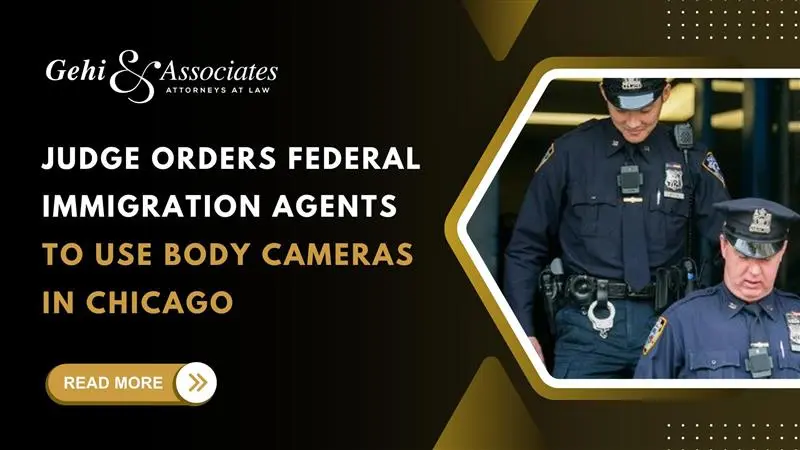
In a ruling that could reshape the future of U.S. immigration enforcement, a federal judge in Chicago has mandated that federal immigration agents wear body-worn cameras during enforcement operations. The decision reflects growing public demand for accountability, transparency, and the protection of civil rights within the federal immigration system.
This judicial order does not just impact federal agencies in Chicago it could serve as a nationwide precedent, prompting a broader re-evaluation of how immigration enforcement is conducted, monitored, and reviewed across the United States.
For years, advocates and legal experts have raised concerns about the lack of oversight in Immigration and Customs Enforcement (ICE) and Customs and Border Protection (CBP) operations. While many local and state law enforcement agencies have adopted body-camera policies, federal immigration officers have largely operated without such technology, leaving many enforcement encounters undocumented.
A Landmark Step Toward Accountability and Transparency
Incidents involving alleged misconduct, racial profiling, and violations of due process have intensified calls for reform. The recent ruling in Chicago represents a legal breakthrough in addressing these concerns, creating a structured mechanism for real-time documentation of immigration enforcement.
This decision carries profound implications for both federal agencies and immigrant communities. It strikes at the core of how immigration enforcement is conducted and perceived.
Body-worn cameras provide a clear, factual record of enforcement actions. They can prevent misinformation and reduce disputes over what transpired during an arrest, search, or questioning.
Transparency is not only a matter of ethics; it is a constitutional concern, especially in contexts where individuals’ liberty, family unity, and immigration status are at stake.
Implications for Immigrants and Federal Agencies
The use of cameras ensures that immigration officers are held to the same standard of accountability as local law enforcement. Video evidence can be reviewed to assess whether agents acted within the scope of the law, followed proper protocols, and respected individuals’ rights during enforcement operations.
For immigrants, many of whom face complex legal challenges or fear deportation, body-camera footage could serve as vital evidence. It can corroborate claims of mistreatment or procedural violations, strengthening defenses in immigration court and administrative reviews.
This may also encourage more lawful and humane enforcement practices.
Although the ruling applies specifically to Chicago, it sets a powerful example that may influence policy discussions in other states. Legal experts predict that if the implementation proves effective, federal courts elsewhere may follow suit, making body-camera use standard practice in immigration enforcement.
Addressing Privacy and Policy Challenges
While the decision is widely praised, it also raises important questions about privacy, data storage, and the legal use of footage.
- Privacy Concerns: Immigrants and bystanders may worry about the handling of recorded data, especially if footage is shared between agencies or used for unrelated investigations.
- Evidence Management: Proper protocols must govern who can access recordings, how long footage is stored, and how it can be used in court.
- Policy Consistency: The federal government will need to create clear guidelines for agents across multiple jurisdictions to prevent inconsistent enforcement or misuse of video evidence.
Attorneys, advocacy organizations, and community groups are closely watching how the Department of Homeland Security (DHS) and related agencies implement these changes.
Gehi & Associates: Empowering Immigrants Through Legal Awareness
This ruling symbolizes a shift toward judicial oversight and transparency in immigration law enforcement, particularly in areas that have historically operated with limited visibility.
For immigration attorneys and clients alike, this change highlights the importance of legal preparedness and understanding how enforcement practices intersect with constitutional rights.
Body-camera recordings could:
- Help establish timelines and evidence in removal proceedings.
- Support asylum or protection claims where mistreatment or procedural violations occurred.
- Strengthen motions to suppress evidence obtained unlawfully.
If you or someone you know is approached or detained by immigration officers:
- Stay calm and know your rights. You have the right to remain silent and the right to speak with an attorney.
- Ask if you are free to leave. If the officer says yes, you can walk away calmly.
- Do not sign anything without legal advice. Always consult an immigration attorney before signing any documents related to removal or voluntary departure.
- Document your experience. If body cameras are in use, that footage can support your case, but personal documentation is still valuable.
At Gehi & Associates, we emphasize awareness and preparedness because knowing your rights is the first step toward protecting them.
As one of the leading immigration law firms in the United States, Gehi & Associates has represented thousands of clients in deportation defense, adjustment of status, naturalization, asylum, and federal court litigation.
Our experienced attorneys understand the complexities of immigration enforcement and the importance of due process in every case.
Whether you are facing an enforcement action, defending your immigration status, or seeking clarity on how new legal rulings may affect you, our team is ready to help.
Related News


Free Consultation
For Faster Response
We are Available 24/7
Our law offices in NY offer free virtual and in-person consultations for all legal and immigration matters. To schedule one, please get in touch with us today!