
THE UNITED STATES’ GOVERNMENT HALTS THE TEMPORARY PROTECTED STATUS (TPS) FOR AFGHANS
- Home
- ›
- News Alerts
- ›
- THE UNITED STATES’ GOVERNMENT HALTS THE TEMPORARY PROTECTED STATUS (TPS) FOR AFGHANS
Practice Areas
- News
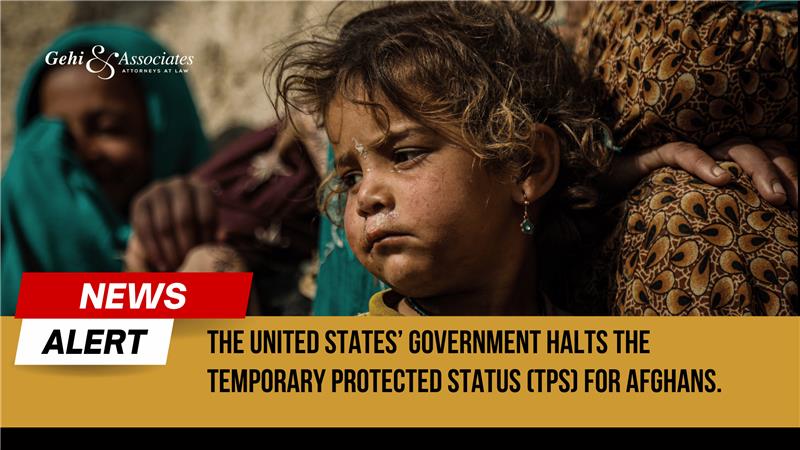
DHS Secretary Kristi Noem explained that the United States government will not be extending Temporary Protected Status (TPS) for Afghans when its existing protection ends on May 20, 2025.
However, the affected people will get a 60-day notice period until July 14, 2025. They are allowed to work during this time, and DHS is automatically extending the validity of some of the work permits that were issued under TPS for Afghanistan to July 14, 2025.
A quick overview
In short, Secretary Noem announced that TPS for Afghanistan will end, with the official termination date of May 20, 2025, and a transition period through July 14, 2025.
TPS was first designated for Afghans on May 20, 2022, due to ongoing conflict and challenging conditions. It was later extended for a further 18 months from November 21, 2023.
Noem said that security and economic benefits mean Afghans can go back home safely. She also added that some TPS holders are a threat, saying, “There are recipients who have been under investigation for fraud and threats to public safety.”
She again emphasized that reconsidering TPS designations is needed to keep our immigration system in check. DHS reiterated that TPS for Afghans will be May 20, and the cancellation shall be effective from July 12.
Brief highlights of the controversy on halting of TPS for Afghanistan
Ending TPS for Afghans would mean over 9,000 people could be forced to go back to Afghanistan. DHS claims conditions are improved, and national security is at issue, but critics like AfghanEvac claim it is politically driven and possibly unsafe.
The UN has raised alarm about the humanitarian crisis, citing increased deportations and asking for $75 billion in assistance as the situation in Afghanistan worsens.
How TPS and humanitarian parole began for Afghanistan
The Taliban regained control of Afghanistan in 2021 when the United States troops withdrew after two decades. Things there became extremely unsafe, so President Biden decided to grant Temporary Protected Status (TPS) to Afghans since it wasn’t safe for them to return.
In the crisis of 2021, US troops helped evacuate thousands of Afghans, and some of these were resettled in the United States under “humanitarian parole.” That is a short-term immigration status allowing individuals to receive permission to come into the country for urgent needs but not settle there permanently.
NGO describes the DHS decision as unreasonable
AfghanEvac, an NGO acting on behalf of Afghans resettling within the US, criticized this move. In an X post, organization president Shawn VanDiver branded what DHS did “unreasonable.”
“The revocation of TPS for Afghanistan is not reality-driven—it is all politics,” VanDiver said.
“Afghanistan is still Taliban-controlled. There is no working asylum system. There are ongoing assassinations, arbitrary arrests, and gross human rights violations, especially against women and ethnic minorities.”
“What the administration did today (i.e., May 12, 2025) is a betrayal to those who put their lives on the line for America, built lives here, and trusted our promises,” VanDiver said.
Demonstrators say that the situation in Afghanistan continues to be extremely perilous. This is especially for women, minorities, and those who were connected to the former regime supported by the US. CASA has filed a lawsuit over the cancellation of protections, saying that doing so ignores present threats against Afghan nationals.
How does this move affect millions of Afghans
The United Nations Refugee Agency’s latest report says over 3.4 million Afghans have returned to Afghanistan or been deported from Iran and Pakistan since 2023.
Well over 250,000 Afghans came back on their own in April. The number of returns itself is putting more pressure on already stretched humanitarian resources and worsening the situation for millions of people who live on the edge, the UN said in the report.
The agency is seeking $75 billion to help Afghans being repatriated to their nation or who choose to repatriate.
How true are the reasons for halting TPS for Afghans
Ever since the Taliban seized power about four years ago, security and the economy in Afghanistan have not gotten any better—on the contrary, they have deteriorated. The claims of stability by Kristi Noem are not close to the truth.
Afghanistan is still one of the safest places on the planet for girls and women. The Taliban has targeted them with nearly 150 laws that strip them of their basic rights, including forbidding education, work, and even socialization among themselves.
With half the population of women kept out of the workforce, the economic crisis in Afghanistan has only worsened, as the other half of the population cannot contribute.
Noem’s view overlooks these harsh realities and does not see the ongoing oppression and instability in the country. Also, unemployment among men has seen its highest rate in four years, which means a total economic collapse reaching all sections.
The new refugee program amid this move
In contrast, the Trump administration has launched a new refugee program that prioritizes white South Africans, especially Afrikaners, arguing that there is “racial discrimination” in South Africa under its Black government.
A total of 59 white South Africans arrived in the US under this program on May 12. Opponents argue that this shift indicates a racial tone in the administration’s immigration policy that favors white individuals over those who are fleeing danger and war.
The contrast between cutting protections for Afghans and rolling out the welcome mat to white South Africans sparked vitriolic discussions about the Trump Administration’s immigration agenda and whether it is compatible with humanitarian principles.
The core risks of this move
As the political debate around immigration and Temporary Protected Status (TPS) for Afghans rages on, thousands of people in danger of being deported are stuck in limbo, not knowing what their futures hold and in fear and uncertainty.
If they are repatriated, they stand to be sent to a place where their human rights are not upheld and where their lives are at risk. The majority would be returning to violence, persecution, and oppression, without any legal support, education, or work.
This not only harms their welfare and mental health in the next days and months but also disheartens families and communities who have built their lives here in the US. The price to human lives of waiting to protect is too great to overlook.
To stay updated and informed, keep an eye out for our news section or drop your immigration queries for professional attorneys to reply to Contact Us – Gehi & Associates.
Related News


Free Consultation
For Faster Response
We are Available 24/7
Our law offices in NY offer free virtual and in-person consultations for all legal and immigration matters. To schedule one, please get in touch with us today!