
Blog Categories
Practice Areas
Tags
- child immigration USA, EB4 visa SIJS, Form I-360 SIJS, green card for minors, immigration for minors, juvenile immigration status, SIJS, SIJS 2026 updates, SIJS eligibility, SIJS green card, SIJS lawyer, SIJS process, SIJS visa bulletin, Special Immigrant Juvenile Status, undocumented minors immigration
- Blog
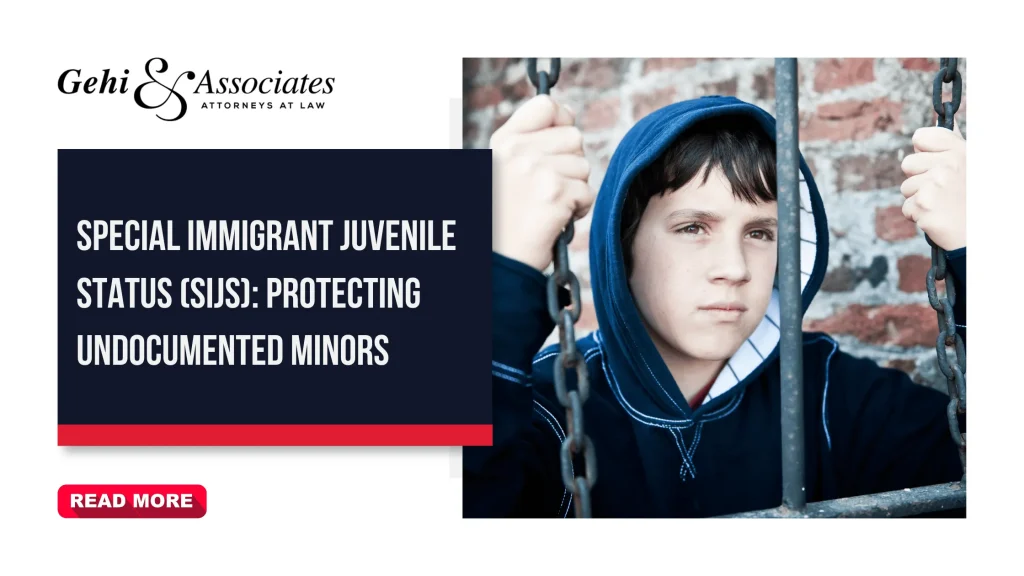
Some children come to the United States carrying stories no child should have to tell. They have been hurt or abandoned by a parent. They cannot safely go home, and they cannot reunite with the parent who caused them harm.
Congress built a path for them. It is called Special Immigrant Juvenile Status. The status protects these young people and opens a road to a green card.
This guide walks through what SIJS is in plain language. It covers SIJS eligibility, the steps involved, and the SIJ green card that follows. It also explains where an immigration for minors lawyer makes the real difference.
What SIJS Is
Congress created Special Immigrant Juvenile Status in 1990. It was designed for undocumented children who have suffered abuse, abandonment, or neglect by one or both parents.
The status comes from a two-step process. A state court has to make specific findings about the child first. Then USCIS reviews the federal petition.
Once SIJS is approved, the young person can eventually apply for a green card. The wait for that green card is the hardest part for most families today.
Who This Status Was Built For
SIJS reaches children in many different situations. The thread that ties them together is harm or abandonment by a parent.
Examples include a child whose father disappeared years ago and never returned. A child whose mother was abusive and is no longer fit to care for them.
It can also reach a child whose parents sent them to the US to escape danger and have not been able to provide care. The facts vary widely.
SIJS Eligibility: Who Qualifies
To meet SIJS eligibility, the applicant has to satisfy four core requirements.
- The applicant must be under 21 at the time of filing the federal petition.
- The applicant must be unmarried.
- A state court must have issued specific findings about abuse, abandonment, or neglect by one or both parents.
- Returning the child to the home country must not be in their best interest.
The state court findings are the foundation of the case. They are not optional. Without them, the federal petition cannot succeed.
Each state has its own family or juvenile court system. The exact name of the order varies. The substance is what USCIS reviews.
How the Process Works
The SIJS process moves in two big stages. The first stage happens in state court. The second stage happens at USCIS.
Stage 1 — State Court Findings
A state court has to enter an order with three specific findings. The court must find that the child cannot be reunified with one or both parents because of abuse, abandonment, or neglect.
The court must also find that it is not in the child’s best interest to return to their home country. And it must make findings about the child’s care and custody.
The court is not deciding immigration. It is making findings about the child under state law. USCIS then uses those findings to decide the federal petition.
Stage 2 — File Form I-360 With USCIS
Once the state court order is in hand, the child files Form I-360 with USCIS. This is the petition for Special Immigrant Juvenile Status itself.
The packet includes the state court order, identity documents, and a personal declaration. Supporting evidence often includes school records, medical records, and witness statements.
By statute, USCIS is supposed to decide within 180 days. Real-world processing has been slower than that. A skilled lawyer will push for timely adjudication.
Stage 3 — Wait for a Visa Number
Approval of the I-360 does not give a green card right away. SIJS green cards fall under the EB-4 visa category. That category has annual numerical limits.
Demand exceeds those limits by a wide margin. The result is a backlog that has trapped tens of thousands of approved young people in legal limbo for years.
In March 2026, the Visa Bulletin showed forward movement for many waiting applicants. Some who had been stuck for years became eligible to file for a green card. Check the current bulletin carefully with counsel.
Stage 4 — Apply for the SIJ Green Card
When a visa number is available, the applicant files Form I-485 for the SIJ green card. The packet covers identity, admissibility, and the underlying SIJS approval.
Filing the I-485 also opens the door to work authorisation and travel permission while the case is pending. These benefits matter a great deal during the long wait.
The 2026 Policy Shift
The landscape changed sharply in 2026. USCIS rescinded the long-standing policy of granting automatic deferred action to approved SIJS holders waiting for a visa number.
The rescission took effect on May 10, 2026. It has been challenged in federal court, and parts of the litigation remain active. The legal terrain may shift again.
What this means in practice is straightforward. Approved SIJS youth without a current visa number now face less automatic protection from removal than they had before.
An immigration for minors lawyer can review your case under the current rules. They can advise on renewals, alternative protections, and timing decisions that matter more than ever.
Why the State Court Step Matters So Much
Most failed SIJS cases fail at the state court step. The findings are too vague. Or they do not address the right parent. Or the child aged out before the order was entered.
Family court and juvenile court judges are not immigration experts. Many have never seen an SIJS request before. The lawyer’s job is to guide the court through the right findings.
Strong state court orders make USCIS petitions move smoother. Weak orders create RFEs that are hard to fix after the fact. Get this part right the first time.
Common Pitfalls
- Filing close to the child’s 21st birthday and missing the federal deadline.
- State court orders that are missing the required findings or do not name the right parent.
- Mistaking marriage for a small obstacle — marriage disqualifies SIJS eligibility outright.
- Treating the I-360 approval as the finish line and ignoring the long wait that follows.
- Failing to renew work authorisation on time once it has been granted.
- Travelling abroad without advance parole during the green card process.
Why You Need an Immigration for Minors Lawyer
SIJS cases sit at the intersection of state family law and federal immigration law. Few lawyers know both well. An experienced immigration for minors lawyer handles both pieces in coordination.
They draft state court papers that survive USCIS scrutiny. They time the filings to protect the child’s age. They handle the I-360 and the eventual I-485 with the care a child’s future deserves.
They also keep families informed during the long wait. The work does not end at approval. It continues until the green card is in hand.
Free Consultation
If you are caring for a child who may qualify, do not wait for the perfect moment. Time is the one thing these cases cannot get back.
Book a free consultation with our team at Gehi and Associates. We will listen, review the situation, and tell you honestly where the case stands. The conversation is confidential and there is no pressure to file with us.
Frequently Asked Questions:
What is Special Immigrant Juvenile Status?
It is a humanitarian protection for undocumented children who have been abused, abandoned, or neglected by a parent. It opens a path to lawful permanent residence in the United States.
Does the abuse have to be by both parents?
No. SIJS eligibility requires that the child cannot be reunified with one or both parents. A single qualifying parent is enough under federal law, though state rules vary.
Can the child still live with one parent and qualify?
Yes, in many states. The key is the state court finding about the offending parent. A child can live with a fit parent or guardian and still qualify based on the other parent’s conduct.
What is the age limit?
The applicant must be under 21 when the I-360 is filed. Some states allow the predicate state court order up to age 21. Others require it earlier. State rules matter here.
How long does the SIJ green card process take?
It depends on the Visa Bulletin. Some approved SIJS holders have waited several years for a visa number to become available. The March 2026 bulletin moved priority dates forward for many. Check the current bulletin with counsel before assuming anything about your timeline.
Can my child work while waiting?
After filing the I-485, the child can apply for an Employment Authorisation Document. Before that, work permission depends on the current deferred action rules, which changed in 2026.
What happens to siblings?
Each child files a separate petition. SIJS is individual, not family-based. Siblings do not benefit automatically from one approval, although their cases often share similar facts.
Does my child have to testify in court?
Sometimes, but not always. Many state court cases proceed on declarations and supporting documents. When testimony is needed, a lawyer prepares the child carefully and supports them through it.
Can a parent file for SIJS on behalf of a child?
The child or a representative files the petition. A non-offending parent or legal guardian usually acts on the child’s behalf. The lawyer can be appointed as the child’s representative.
What if my child already received deportation papers?
SIJS can still be pursued. The child may need to seek termination of proceedings, administrative closure, or other relief while the SIJS case moves forward. Act quickly — every hearing matters.
Related Posts


Free Consultation
For Faster Response
We are Available 24/7
Our law offices in NY offer free virtual and in-person consultations for all legal and immigration matters. To schedule one, please get in touch with us today!